0086 574 87739122


.jpg) Ni: Ethan
Ni: Ethan
Ang desisyon ay kadalasang bumababa sa dalawang titik: PP o PET. Ang isang meat processor ay nangangailangan ng tray na patuloy na tumutulo at mukhang malinis pa rin sa ilalim ng ilaw ng tindahan. Ang isang brand ng frozen na pagkain ay nangangailangan ng isang lalagyan na napupunta mula sa freezer patungo sa microwave o convection oven nang walang warping. Parehong nagtatanong ang dalawa sa magkaibang salita, at ang pagkakamali sa materyal ay maaaring mangahulugan ng mga tumutulo na pakete, natunaw na mga tray, o pinaikling buhay ng istante.
Ang polypropylene (PP) ay isang magaan na thermoplastic na may bahagyang malabo, translucent na hitsura. Baluktot ito sa halip na bitak, talbog pabalik mula sa magaspang na paghawak, at humahawak hanggang sa paulit-ulit na pagtitiklop o pag-hinging, kaya naman karaniwan ang PP sa mga lalagyan ng hinged deli at takip ng tasa. Nakayanan nito ang mga temperatura hanggang sa humigit-kumulang 130°C sa mga maikling panahon, na ginagawa itong default na pagpipilian para sa microwave reheating.
Ang PET ay mas siksik, matigas, at mas malinaw. Sa karaniwang amorphous na anyo nito, lumalambot ito sa humigit-kumulang 70°C, na nililimitahan ito sa malamig at ambient fill na mga application. Kapag na-kristal sa CPET, gayunpaman, ang parehong resin ay nagiging ovenable hanggang sa humigit-kumulang 220°C. Ang kakayahang umangkop na iyon ay ginagawang mas malawak ang pamilya ng PET kaysa sa iminumungkahi ng katamtamang patuloy na serbisyong rating nito.
Ang parehong mga resin ay maaaring gawing thermoform sa mga tray, tasa, takip, at lalagyan. Lumalabas ang mga pagkakaiba sa kung paano kumikilos ang bawat isa sa isang filling line, sa isang distribution truck, at sa hapag-kainan ng isang mamimili.
| Ari-arian | PP (Polypropylene) | PET (Polyethylene Terephthalate) |
|---|---|---|
| Hitsura | Malabo, translucent | Maaliwalas, parang salamin |
| Patuloy na limitasyon ng init | ~130°C, ligtas sa microwave | ~70°C; CPET hanggang 220°C na ligtas sa oven |
| Malamig na pagganap | Nananatiling flexible sa mababang temperatura | Maaaring maging malutong sa ibaba -40°C sa ilang grado |
| Barrier ng oxygen | Katamtaman | Mga sampung beses na mas mahusay kaysa sa PP sa pantay na kapal |
| Barrier ng kahalumigmigan | Mas mahusay na paglaban sa singaw ng tubig | Mabuti, ngunit bahagyang mas mababa sa PP |
| Paglaban sa kemikal | Mahusay laban sa mga acid at langis | Mabuti, hindi gaanong lumalaban sa malakas na alkalis |
| Densidad | 0.90 g/cm³ | 1.38 g/cm³ |
| Karaniwang gamit | Mga pagkain sa microwave, deli cups, lids | sariwang karne display, fruit punnets, ovenable CPET trays |
| Recyclable | Nare-recycle, nag-iiba ang stream ayon sa rehiyon | Recyclable, mature stream sa maraming mga merkado |
Ang init ay ang pinakamabilis na paraan upang paghiwalayin ang PP mula sa PET. Ang PP ay may melting point na malapit sa 160°C, kaya naman lumilitaw ito sa mga microwaveable meal tray, hot-fill cups, at packaging na nakadikit sa bagong luto na pagkain. Ito ay lumalambot at madidistort sa ilalim ng direktang init ng oven, kaya hindi ito ginagamit sa mga karaniwang oven.
Hindi kayang hawakan ng amorphous PET ang microwave o oven duty. Ito ay pumipihig at nagiging malagkit kapag nalantad sa mataas na init. Ngunit ang CPET, na ginawa sa pamamagitan ng pag-align ng mga polymer chain sa pamamagitan ng crystallization, ay ibang produkto sa kabuuan. Ang mga tray ng CPET ay idinisenyo para sa dual-ovenable na paggamit, na nakaligtas sa parehong microwave at conventional oven sa 180-220°C, kaya naman ang mga ito ang pamantayan para sa mga handa na pagkain na nangangailangan ng malutong na pagtatapos sa ilalim ng oven grill.
Kung ang iyong linya ay nagpapatakbo ng frozen na lasagna o isang bake-at-home pie, magsimula sa Mga CPET tray para sa oven-safe at dual-ovenable na packaging . Kung kailangan mo lang ng microwave reheating, gagawin ng PP ang trabaho sa mas mababang presyo ng piraso.
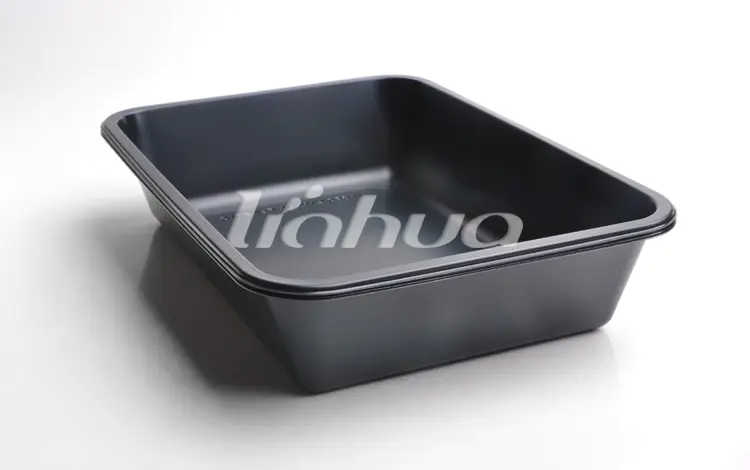 Wholesale Plastic Disposable CPET Food Tray Manufacturers Bilang nangungunang tagagawa at supplier ng tray ng CPET sa China, ang Ningbo Linhua Plastic Co., Ltd ay pakyawan na mga plastic na CPET na handa na tray ng pagkain. Painitin muli... Tingnan ang Produkto →
 Ang PET ang malinaw na nagwagi sa optika. Ang liwanag na transmisyon nito ay lumalapit sa salamin, na nagbibigay sa mga mamimili ng hindi nakaharang na pagtingin sa produkto. Mahalaga iyon para sa mga inatsara na karne, premium na dessert, sariwang berry, at anumang item kung saan ang kulay at texture ang nagtutulak sa pagbili.
Ang PP ay natural na malabo. Maaari itong linawin sa mga ahente ng nucleating, ngunit kahit na pagkatapos ay hindi ito tumutugma sa transparency ng PET. Para sa mga produktong umaasa sa label kaysa sa ibebentang pagkain, ang malabo na PP ay bihirang problema. Para sa mga produktong ipinapakita sa isang refrigerated case, ang malinaw na PET tray ay lumikha ng mas malakas na impression at kadalasang sumusuporta sa mas mataas na punto ng presyo.
Sinisira ng oxygen ang sariwang kulay ng karne, pinapabilis ang oksihenasyon ng lipid, at pinaikli ang buhay ng istante. Ang PET ay may makabuluhang kalamangan dito, na may paghahatid ng oxygen na halos sampung beses na mas mababa kaysa sa PP sa parehong kapal. Ito ang dahilan kung bakit karaniwan ang PET sa binagong packaging ng kapaligiran para sa karne ng baka, manok, at baboy.
Ang PP ay lumalaban sa moisture side. Ang rate ng paghahatid ng singaw ng tubig nito ay mas mababa, kaya nakakatulong itong panatilihing tuyo ang mga tuyong produkto at pinipigilan ang paghalay sa loob ng isang selyadong lalagyan kapag nagbabago ang temperatura.
Kapag kailangan mo ng parehong oxygen at moisture protection sa isang tray, ang sagot ay karaniwang isang multi-layer na istraktura na may EVOH interlayer. Maaaring i-co-extruded ang EVOH sa alinman sa mga tray ng PP o PET, at ito ang nagtutulak sa buhay ng istante mula araw hanggang linggo. EVOH barrier tray at tasa ay isang praktikal na opsyon kapag nagta-target ang isang produkto ng mas mahabang cycle ng distribution o export chain.
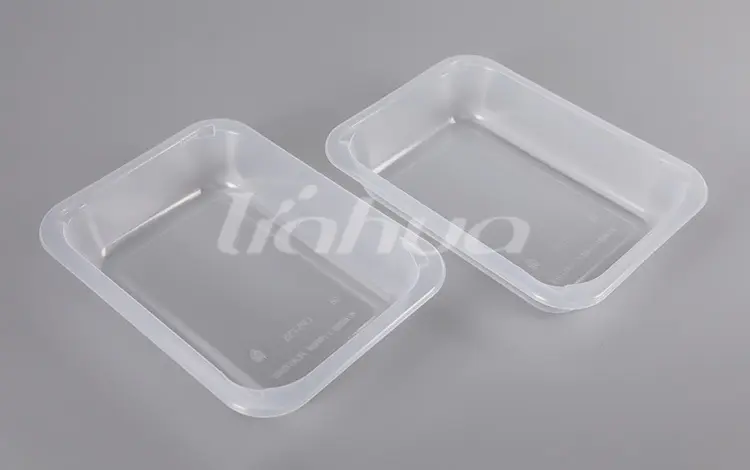 Mga Supplier ng Tray ng Modified Atmosphere Packaging(Map), Mga EVOH Tray Ang Ningbo Linhua Plastic Co., Ltd ay dalubhasa sa paggawa ng mga tray ng packaging ng mapa. Ang high barrier na PP MAP tray ay mas mainam para sa sariwa o frozen na pagkain... Tingnan ang Produkto →
 Ang liquid pooling ay isa sa pinakamabilis na paraan para mawala ang retail account. Ang pag-iyak ng karne, pagpapawis ng manok, at kahit na hinugasan ay naglalabas ng tubig. Ang isang tray na hindi kayang pamahalaan ang likidong iyon ay nag-iiwan sa pakete na mukhang pagod at nagbibigay sa bakterya ng isang mas magiliw na kapaligiran.
Ang mga PET tray ay malawakang ginagamit para sa sariwang karne dahil ang malinaw na materyal ay nagpapakita ng hiwa habang ang isang absorbent pad ay nakapatong sa ilalim. Ang tigas ng PET ay pumipigil sa tray mula sa pagyuko sa ilalim ng isang mabigat na inihaw o isang stack ng mga suso ng manok. Ang mga moisture-retention tray ay nagdaragdag ng patterned well o absorbent layer na pumipigil sa pagtulo mula sa produkto. Para sa mga processor na nangangailangan ng balanse ng display, rigidity, at pad-based moisture management, ang custom na PET meat packaging trays na may moisture retention ay isang direktang akma.
Iba ang paghawak ng PP sa moisture. Ito ay isang mas mahusay na water vapor barrier sa pangkalahatan, ngunit ang isang PP tray na may pad ay maaari pa ring gumana nang maayos. Ang kadahilanan ng pagpapasya ay karaniwang tigas. Ang PP ay bumabaluktot kapag puno ng mga siksik na hiwa; Hawak ng PET ang hugis nito. Para sa isang mabigat na basang produkto, ang PET ang kadalasang mas ligtas na tawag.
Ang mga weight drive ay nagkakahalaga ng bawat libong piraso. Ang PP ay may density na humigit-kumulang 0.90 g/cm³, habang ang PET ay malapit sa 1.38 g/cm³. Para sa parehong dami ng tray, ang isang bahagi ng PP ay gumagamit ng humigit-kumulang 30-35% na mas kaunting resin ayon sa timbang. Ang agwat na iyon ay lumiliit dahil ang mga tray ng PP ay kadalasang nangangailangan ng mas makapal na pader upang makamit ang higpit na nakukuha ng PET sa mas manipis na sukat, ngunit ang PP ay kadalasang nagpapanatili ng isang piraso-presyo na kalamangan.
Ang mga paghahambing sa pagpapanatili ay mas nuanced. Ang PET ay may mahusay na naitatag na stream ng recycling sa maraming bansa, at ang bottle-grade PET ay malawakang kinokolekta. Ang PP ay recyclable ngunit may hindi gaanong pare-parehong imprastraktura ng koleksyon. Ang mga pagtatasa ng life-cycle ng mga tray ay nagpapakita na ang kinalabasan ay lubos na nakadepende sa end-of-life na mga rate ng koleksyon, kung ginagamit ang recycled na nilalaman, at kung paano nire-recycle ang tray. Sa pangkalahatan, ang mas magaan na tray na talagang kinokolekta at nire-recycle ay nakakatalo sa mas mabigat na tray na hindi.
Sagutin ang limang tanong na ito at kadalasang pinipili mismo ng materyal.
Ang pagsubok ay ang huling hakbang. Thermoform ng maikling pagtakbo ng parehong mga materyales, patakbuhin ang mga ito sa iyong filling line, at ilagay ang mga ito sa parehong malamig na chain at mga kondisyon sa pagluluto na gagamitin ng iyong mga customer. Ang data mula sa pagsubok na iyon ay nagkakahalaga ng higit sa anumang materyal na datasheet.
Simple lang ang rule of thumb. Gumamit ng PET kapag pinakamahalaga ang kalinawan, katigasan, at visual appeal. Gumamit ng PP kapag ang paglaban sa init, magaan ang timbang, at gastos ang nagtutulak ng desisyon. Gumamit ng CPET o isang EVOH multi-layer tray kapag kailangan mo ng kakayahan sa oven o mahabang buhay ng istante. At kung ang iyong produkto ay sariwang karne, basahin ang tungkol sa mga benepisyo ng mga tray ng PET sa packaging ng karne bago mo gawin ang huling tawag. Ang isang pagpipilian na ginawa mula sa aktwal na mga kondisyon ng linya, sa halip na ugali, ay ang isa na nakaligtas sa pakikipag-ugnay sa isang basang steak at isang masikip na refrigerator.
Food-service packaging · Gabay ng mamimili Maliit na Lalagyan, Malaking Pusta: Pagpili n...
Packaging ng Inumin · Tala sa Field ng Mamimili Mga Eco Friendly na Cup para sa Mga Mala...

0086 574 87739122
Copyright © Ningbo Linhua Plastic Co., Ltd. All Rights Reserved.


Mag -post ng komento